 YouMotorcycle Motorcycle Blog – Motorcycle Lifestyle Blog, MotoVlog, Motorcycle Reviews, News, & How-Tos
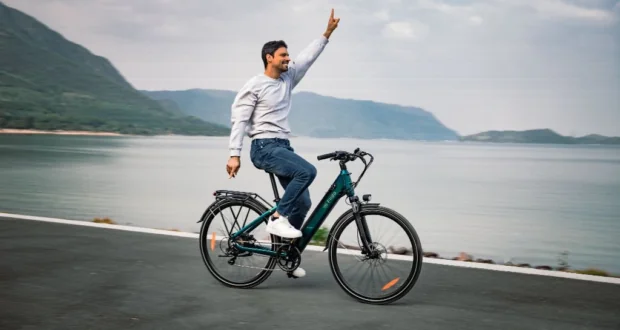
Electric bikes are no longer just bicycles with motors.
They are becoming personal mobility devices, built around software, sensors, batteries, control systems and rider experience. As more people use e-bikes for commuting, errands, delivery work and weekend recreation, the conversation is shifting from basic performance to something more important: control.
How does the rider interact with the machine?
How quickly does the bike respond?

Can the rider adjust assistance when traffic changes, a hill begins or fatigue sets in?
That is why throttle control has become such an interesting feature in the modern e-bike market. To some riders, a throttle may look like a simple button or twist control. In reality, it represents a larger trend in consumer technology: making machines more intuitive, more responsive and easier for more people to use.
In the same way that smartphones replaced complicated menus with touchscreens, smart mobility devices are moving toward simpler interfaces that let users act instantly.
For many riders, an e-bike with throttle is not about avoiding pedaling. It is about having an additional layer of control when real-world riding becomes unpredictable.
The Interface Matters as Much as the Motor
When people compare e-bikes, they usually focus on battery range, motor power, frame design or speed.
Those specifications matter, but they do not tell the full story.
A vehicle can have impressive hardware and still feel awkward if the rider cannot control it naturally. The best mobility technology disappears into the background. It lets the user focus on the journey rather than constantly thinking about the machine.
Throttle control fits into this idea.
It gives the rider a direct way to request power when needed. Instead of relying only on pedal-assist sensors, the rider can activate motor support in specific moments: starting from a stop, moving through traffic, climbing a short hill or recovering during a long ride.
That makes the throttle a human-machine interface.
It is the point where the rider’s intention becomes mechanical action.
In a technology context, this is important because mobility devices are judged not only by what they can do, but by how easily people can use them.
Why Throttle Control Appeals to Everyday Riders
Not every rider uses an e-bike the same way.
Some people want fitness support. Some want a reliable commute. Some want a practical tool for errands. Others want help carrying cargo or navigating uneven roads.
Throttle control appeals because it adds flexibility across these use cases.
For a commuter, it can help with quick starts at intersections.
For a rider carrying groceries or work gear, it can make the first few seconds of movement feel easier.
For someone riding in hilly neighborhoods, it can provide confidence when a climb begins suddenly.
For delivery riders, it can reduce fatigue during frequent stop-and-go movement.
For recreational riders, it can make longer trips feel less intimidating.
This does not mean throttle should replace pedaling. In many cases, the best e-bike experience comes from combining pedal assist with occasional throttle use.
The value is optionality.
A rider can pedal when they want to, use assistance when they need it and adapt to changing conditions without stopping to change modes or rethink the ride.
Smart Mobility Is About Reducing Friction
The rise of smart mobility is not only about electric power.
It is about reducing friction in daily transportation.
A car may be comfortable, but parking, fuel, traffic and maintenance create friction.
A traditional bicycle is efficient, but hills, distance, sweat and cargo limitations create friction.
Public transportation can be affordable, but schedules and last-mile gaps create friction.
E-bikes succeed because they reduce many of these barriers at once.
Throttle control reduces another kind of friction: hesitation.
A rider may hesitate before entering traffic from a stop sign.
They may hesitate before choosing a route with hills.
They may hesitate to use a bike for errands because starting with a loaded basket feels difficult.
A throttle can make those moments easier.
That is why riders searching for an ebike with throttle are often looking for more than speed. They are looking for confidence, convenience and a more forgiving riding experience.
The Throttle as a Safety and Confidence Feature
Throttle control is sometimes misunderstood as a feature designed only for speed.
In real-world riding, its most practical benefit may be confidence.
Starting from a complete stop is one of the moments when riders feel most vulnerable. This is especially true at intersections, on inclines or when carrying extra weight. A controlled burst of power can help the rider get moving smoothly and reduce wobbling during the first few pedal strokes.
For newer riders, that confidence matters.
An e-bike should not feel intimidating. It should feel supportive.
This is similar to how driver-assistance features in cars have changed expectations. Backup cameras, hill-start assist and adaptive cruise control do not replace the driver. They support the driver in specific moments.
Throttle control can play a similar role for e-bike riders.
It does not replace human input. It gives riders an extra tool when timing, terrain or traffic makes riding more complex.
Fiido and the Practical Side of Throttle E-Bikes
Fiido’s e-bike lineup reflects the fact that riders do not all need the same type of electric assistance.
Some users want compact city transportation. Some want fat-tire stability. Some want cargo capability. Some need a daily commuting tool that feels efficient and approachable.
That is why Fiido’s throttle-focused collection is best understood as a set of mobility solutions rather than a single product category.
The feature may be simple, but the use cases are broad.
Fiido M1 Pro: Throttle Support Meets Fat-Tire Stability
The Fiido M1 Pro represents a different use case.
It combines folding convenience with fat-tire capability, making it relevant for riders who want more stability across mixed terrain. Fat tires can help provide confidence on rough pavement, gravel paths and uneven roads.
Throttle control adds another layer to that experience.
When terrain changes quickly, immediate power can be useful. A rider may need help rolling through a rough patch, starting on loose ground or maintaining momentum on a short incline.
This is where throttle support and tire stability work together.
The result is not simply a more powerful ride. It is a ride that feels more adaptable.
For users who want an e-bike for both urban trips and weekend exploration, that adaptability can be valuable.
Fiido Titan and C11: Throttle Support for Distance and Daily Commuting
Throttle control is not only useful for cargo or utility riding. It can also make a major difference for riders who care about long-distance confidence and everyday commuting comfort.
The Fiido Titan represents the endurance side of this category. For riders who want an e-bike that can handle longer routes, weekend exploration and more demanding terrain, immediate motor response can make the ride feel more controlled. When a route includes hills, rougher surfaces or long stretches where fatigue builds gradually, throttle support gives the rider another way to manage energy without stopping the ride.
This matters because long-distance riding is not only about battery capacity. It is also about confidence. A rider may feel comfortable taking a longer route when they know the bike can provide quick assistance during difficult moments. For people using an e-bike as both transportation and recreation, that flexibility can make the bike feel more capable and less intimidating.
The Fiido C11 fits a different but equally practical use case: daily commuting. City riders often deal with traffic lights, intersections, short hills, crowded streets and repeated starts. In these situations, throttle support can help smooth out the first few seconds of movement and make the commute feel easier.
For commuters, the value is not about riding faster. It is about making daily travel more predictable. A rider leaving a stoplight, crossing an intersection or starting on a slight incline may appreciate having immediate assistance available. Combined with a commuter-focused riding position and everyday usability, the C11 Pro shows how throttle control can support normal urban routines.
Together, the Titan and C11 Pro show that throttle e-bikes are not limited to one type of rider. One supports riders who want range and adventure capability. The other supports riders who want a smoother, more convenient daily commute. In both cases, the throttle works as an interface between rider intention and electric assistance, giving the rider more control over how the bike responds.
Why Throttle E-Bikes Fit the Future of Consumer Technology
The most successful consumer technologies have one thing in common: they become easier to use over time.
Early computers required technical knowledge.
Modern smartphones made powerful tools accessible through simple gestures.
Smart home devices turned complex functions into voice commands and app controls.
E-bikes are moving through a similar evolution.
The motor and battery are the foundation, but the interface determines how comfortable the technology feels.
Throttle control is part of that interface evolution.
It turns electric assistance into something immediate and understandable. The rider does not need to think about sensor behavior or pedal cadence in every situation. They can simply request power when the moment calls for it.
That makes the riding experience more inclusive.
It helps people who may be new to cycling, returning after years away or using an e-bike for practical transportation rather than sport.
Choosing the Right Electric Bike for Your Daily Routine
Before buying an electric bike, riders should think about how they will actually use it.
Throttle control is valuable, but it should be evaluated alongside other factors.
A city rider may prioritize compact size and easy storage.
A commuter may care most about range, reliability and comfort.
A rider in a hilly area may need stronger motor support.
A utility rider may need cargo capacity and stable handling.
A weekend rider may value tires, suspension and terrain adaptability.
The right choice depends on the full mobility problem, not just one feature.
That is why brands like Fiido offer different models for different scenarios. The goal is not to make every rider choose the same bike. It is to help riders choose a bike that fits their environment, routine and confidence level.
European Manufacturing and Trust in Mobility Hardware
As e-bikes become more technologically advanced, build quality becomes more important.
A smart mobility device is still a physical vehicle. It must handle roads, weather, weight, vibration and daily use. Riders depend on the frame, battery, motor system and controls working together reliably.
Fiido has also expanded European manufacturing for selected models, with certain European-market e-bikes manufactured in France. This should not be confused with every Fiido model being European-made, but it does show the brand’s attention to regional quality expectations and long-term product trust.
For buyers, this matters because an e-bike is not a disposable gadget.
It is a transportation tool.
When people use it for commuting, errands, family mobility or work, reliability becomes part of the value proposition.
The Future Is More Control, Not Just More Power
The e-bike industry often talks about power, range and speed.
Those will continue to matter, but the next stage of smart mobility may be defined by something quieter: better control.
Throttle control is one example of this shift.
It gives riders another way to interact with the machine. It supports confidence, convenience and flexibility. It helps e-bikes serve more people in more situations.
For commuters, it can smooth out stop-and-go traffic.
For cargo riders, it can help with loaded starts.
For newer riders, it can reduce intimidation.
For everyday users, it can make short trips feel easier.
That is why the search for throttle e-bikes is not just a search for a feature. It is part of a broader movement toward personal transportation that feels more responsive, more intuitive and more human-centered.
As e-bikes continue to evolve, the most important question may not be how powerful they become.
It may be how naturally they fit into the way people move.
Disclaimer: Throttle-equipped e-bike configurations are intended only for markets where throttle operation is legally permitted, such as the United States. Regulations vary by country, state, and region, so riders should always check local e-bike laws before purchasing or using a throttle-enabled model.


